There’s a kind of grief we don’t talk about enough—the grief of not being able to have a child.
In 2017, I was dealing with pain in my lower back that wasn’t just uncomfortable—it was debilitating. I couldn’t walk without severe pain. I couldn’t function normally. It got so bad that I was using a motorized wheelchair while teaching and anytime I left the house.
My husband—my fiancé at the time—helped me finally get in to see a specialist after months of waiting. We were just a few months away from getting married, and honestly, my biggest fear wasn’t even the diagnosis—it was whether I’d be able to walk down the aisle.
(Spoiler alert: I did. Painfully. I made it through about 90% of the reception before we called it and went home.)
At my back surgeon appointment, he was trying to pinpoint the cause of the pain. Eventually, he found it—my lower vertebra was fused to my hip bone and pinching nerves. His plan was surgery in December to remove part of the bone and relieve the pressure.
And then, sitting in that doctor’s office, he asked a question I will never forget:
“Are you guys planning on starting a family?”
We both looked confused and said yes—we were getting married soon and hoped to start right away. Up until that point, I’d always been told that pregnancy was possible, just high risk.
That’s when he told us my pelvis was essentially in multiple pieces—and that pregnancy would be fatal to me and the baby. That my husband could potentially be faced with choosing between us.
In one sentence, everything I had imagined disappeared.
The idea of pregnancy.
Feeling a baby grow inside me.
That bond that starts before anyone else even knows them.
It was terrifying. Heartbreaking. Dream-crushing.
And then my husband said something that still matters just as much today. He said, “Babe, there are so many ways to become parents. There are so many kids who need mommies and daddies. We will become parents.”
It helped. Knowing he still wanted to marry me. Knowing surgery and uncertainty didn’t change his commitment. Knowing that parenthood wasn’t off the table—it would just look different.
But what I didn’t realize then was that I was grieving.
I didn’t have language for it. I didn’t think I was allowed to grieve it. I hadn’t miscarried. I hadn’t lost a pregnancy. This wasn’t the kind of grief people know how to acknowledge—so I thought I just needed to be strong and move on.
But looking back, it was grief.
I lost the possibility of ever carrying a child.
I lost that private bond no one else gets to have.
I lost something deeply personal—and I didn’t even know how to name it.
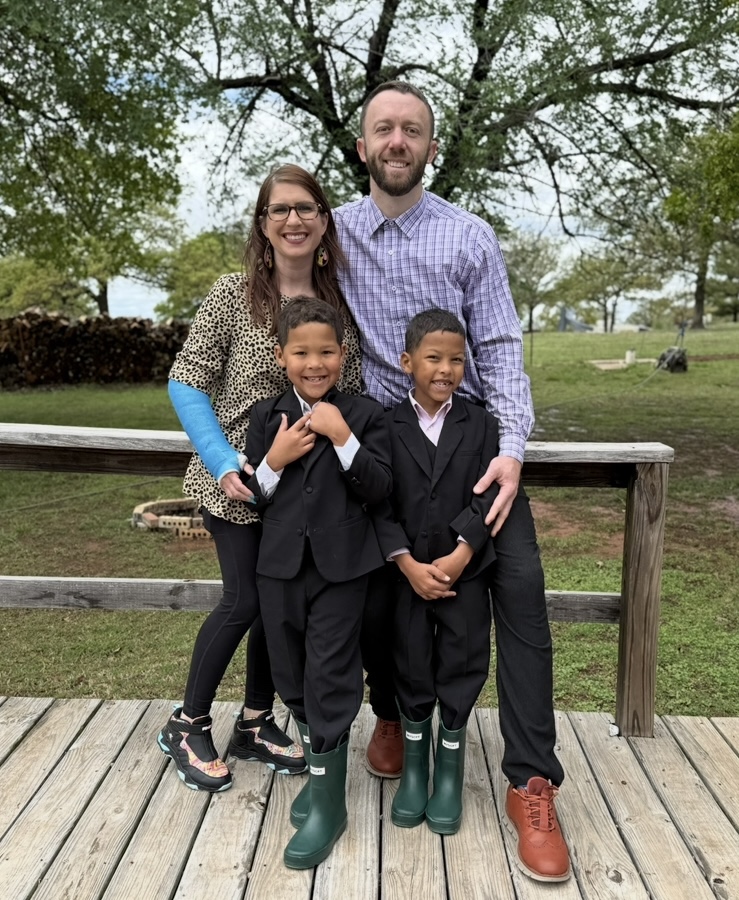
When we got the boys, I loved them fiercely. Completely. And still—quietly—I wrestled with guilt.
Did I love them enough?
Did I love them the same way?
Would bonding feel different because they didn’t grow inside me?
Because they don’t share my DNA?
And here’s the truth I’ve learned:
I cannot compare my love to anyone else’s. I don’t know if it feels exactly the same as another mother’s—and honestly, that’s okay. What I do know is that my love for these boys is complete. Whole. All-consuming.
I love them with everything I have. With my whole heart. There are days I forget they don’t share my DNA because they are so deeply woven into who I am. Into my life. Into my soul.
Do I still grieve the babies I couldn’t physically birth? Yes.
Does that grief look like the grief of losing my dad? No.
Does it still deserve space? Absolutely.
Do I always know how to hold that space? No.
Do I know why it shows up randomly, without warning? Also no.
But I’m learning that grief doesn’t have to be justified to be real. It doesn’t have to look like anyone else’s. And it doesn’t go away just because joy exists alongside it.
If this resonates with you—even a little—I’d love to hear from you.
What kind of grief have you carried that didn’t feel “obvious” or understood?
What loss are you still learning how to name?
You don’t have to explain it perfectly.
You don’t have to minimize it.
You can just say it out loud here.


 Twins Tenders and Teaching
Leave a comment