
Let me just start by saying this: parenting is HARD.
Like, soul-stretching, patience-testing, what-day-is-it-again hard. Being a mom might honestly be one of the hardest jobs I’ve ever had—and I say that with a whole lot of life and work experience behind me.
As most of you know, I’ve spent the last 15 years as an educator. That means I walked into motherhood with a pretty full “tool belt.” I have a bachelor’s degree in early childhood education. I sat through four years of classes on child development, milestones, classroom strategies, trauma and how it affects the brain, and what accommodations can (and should) look like for kids who need them. I’ve also spent years surrounded by people who are far smarter than me—people I can bring very specific concerns to and say, “Okay… help me think through this.”
And over the past seven years, that has been a gift. I’ve been able to take the challenges my twin neurodivergent boys face and work alongside professionals who help me think outside the box and “write” accommodations that actually make sense for our home—not just a classroom.
Spoiler alert: even with all of that, it’s still minute-by-minute trial and error.
Because if I’m being really honest?
Most days it feels like I’m just throwing spaghetti at the wall and praying one noodle sticks… and stays… for more than about 30 seconds.
Parenting twins—especially neurodivergent twins—is a completely different ballgame than parenting a singleton or even siblings spaced years apart. With twins, you’re meeting two kids at the same developmental stage… often with wildly different needs, triggers, strengths, and limits… at the exact same time.
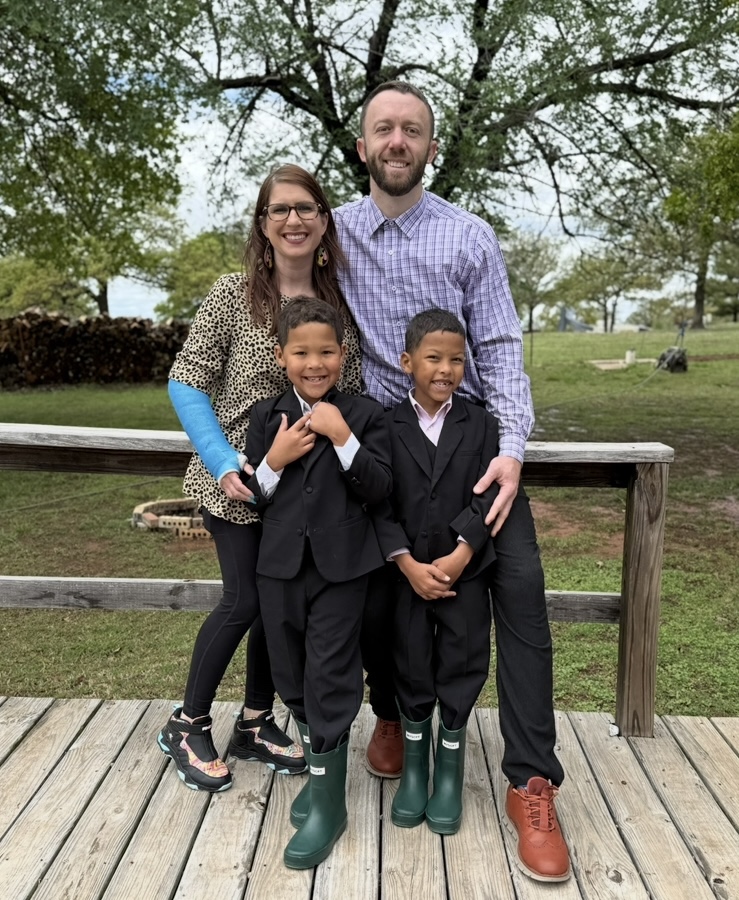
(If you’re new here: one of my boys has level 2 autism, speech and language delay, a processing disorder, global learning delay, and ADHD. The other has ADHD and ODD.)
There is no “one-size-fits-all” approach here. What works beautifully for one twin can completely dysregulate the other. What helps one calm down might send the other straight into overwhelm. You’re not just parenting—you’re constantly translating, adjusting, and recalibrating in real time.
And when you’re parenting neurodivergent kids, that adjusting never really stops. (Yes, I know all parenting requires flexibility—hang with me.) Most days you’re changing tone, plan, and approach minute by minute. Sometimes it looks like you’re “ignoring” the behavior that kicked everything off, when in reality you’re addressing what’s underneath it.
And let me be clear: it’s exhausting.
Not just physically, but mentally and emotionally. You’re always learning. Always re-evaluating. Always asking yourself, Is this still working? Do they need something different now?
Then comes the quiet loneliness of it all—the realization that unless someone has lived this, it can be really hard for them to fully understand it. And that’s exactly why finding people who do understand matters so much.
You need people who don’t judge the accommodations.
Who don’t question the choices.
Who know what it’s like to constantly adjust, advocate, and learn as you go.
You need a village.
(Yes, that village—go read my post about finding your village.)
Not the kind that offers unsolicited advice from the sidelines, but the kind that will research with you and say, “Hey, have you tried this?” Or just let you talk through an idea out loud. Or talk you off a ledge when you’re one hard moment away from wanting to yeet your children out a window. (Kidding. Mostly.)
Reaching out to your village isn’t weakness—it’s survival. It’s biblical. It’s necessary. We were never meant to do this alone. Parenting used to be done in an actual village, and while that idea feels almost absurd now, the need for it hasn’t gone away.
Parenting neurodivergent twins has stretched me in ways I never anticipated. It’s challenged everything I thought I knew about parenting. It’s required humility, flexibility, patience, and a whole lot of unlearning.
And while it’s hard—so incredibly hard—it’s also deeply meaningful.
I get to truly know my kids.
I get to see how their minds work.
I get to advocate for them in a world that isn’t always built with them in mind.
So if your parenting choices feel hard to explain…
If your family doesn’t look the way people expect it to…
If you’re tired of justifying accommodations that help your kids thrive…
You’re not alone.
You’re not doing it wrong.
You’re parenting with intention, compassion, and courage—and that matters far more than fitting into anyone else’s expectations ever could.
And if there’s one thing this season has taught me, it’s the importance of seeking out people who truly understand. People who don’t question your choices but support them. People who bring compassion, experience, and positive ideas—not judgment—to help you navigate the hard days and celebrate the small wins.
Parenting neurodivergent twins isn’t something you’re meant to figure out alone.
Find your people. Ask the questions. Learn from those who’ve walked this road before you.
And truly—if you have tips or tricks that have worked for your kids, or if you have questions about things we’ve tried (both successfully and unsuccessfully), my inbox is always open. 💛


 Twins Tenders and Teaching
Leave a comment