Spoiler: It’s not color-coded binders and Pinterest-perfect mornings.
Homeschooling sounds so peaceful in theory—slow mornings, cozy read-alouds, maybe a fresh loaf of bread rising while the kids happily dive into math. In reality? Some days look a little more like chaos in pajamas with a side of ADHD meltdowns, coffee reheated four times, and me Googling, “Can I count a nature walk as science?”
If you’re new here: I’m a former public school teacher, now homeschooling twin boys—one with autism and one with severe ADHD. That’s a journey I never pictured for myself, but here we are—and I wouldn’t trade it for anything.
This Wasn’t the Plan
I didn’t originally choose to homeschool. I was forced to shift gears after an injury I sustained while teaching. Suddenly, what I’d built my whole professional life around came to a stop—and I had to reimagine what education would look like, not just for my kids, but for myself.
As a public school teacher, stepping away from the structure was harder for me than it was for my boys. Letting go of the worksheets, the timed blocks, the desks, the smartboards—that perfectly structured classroom environment—took a major mindset shift. I had to retrain myself to understand that education didn’t have to look the way it always had.
Unlearning “School”
I used to think a math lesson had to take 45 minutes in a quiet, seated space. Now? I know I can teach math while we’re waiting on pancakes at IHOP, or driving down the road while Daddy’s behind the wheel. We’ve done school in the RV while camping, in the driveway while drawing with sidewalk chalk, and at the park between slides.
I’m still working on giving myself grace when our “school day” wraps up in less than two hours. It feels like I must’ve forgotten something. But then I remind myself:
– We fed the chickens.
– We planted vegetables and talked about the life cycle.
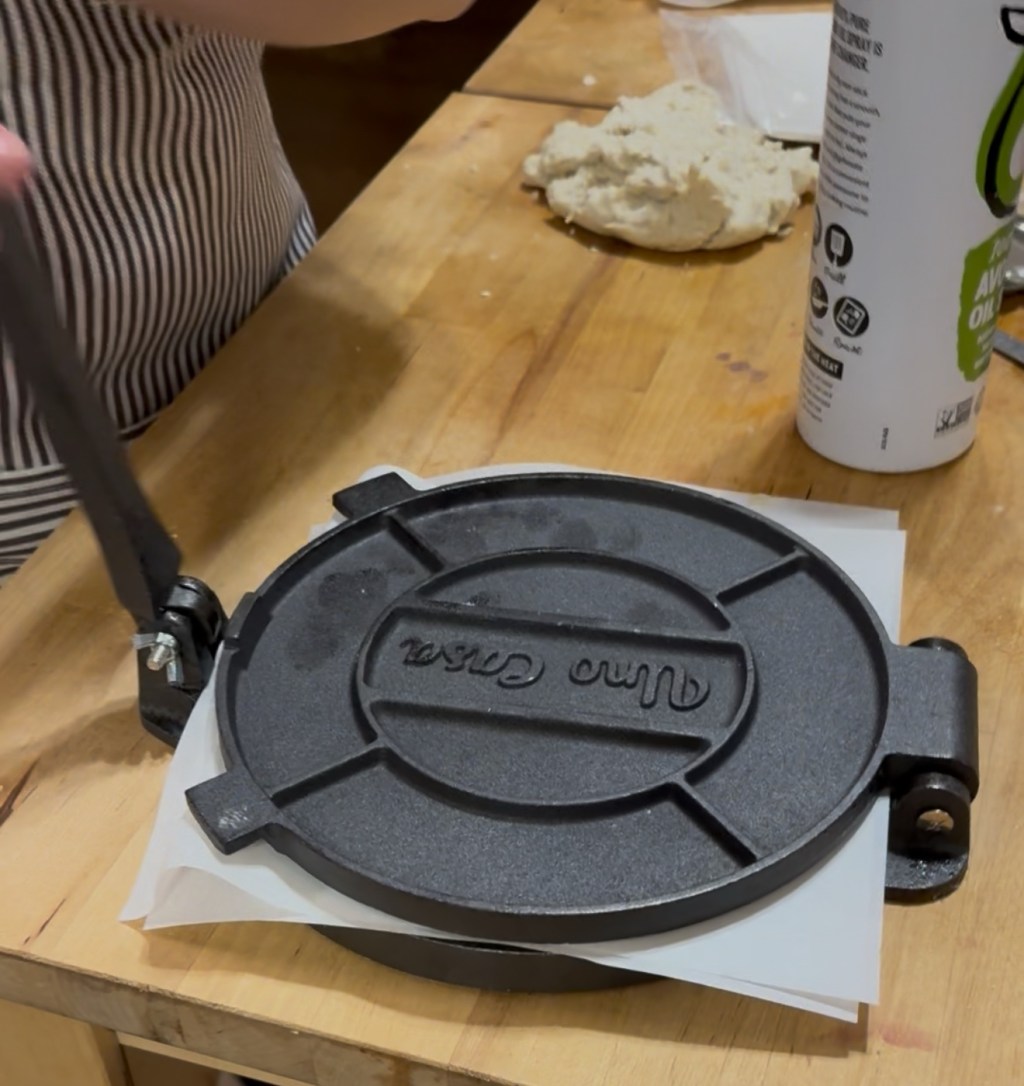
– We baked bread together and measured every ingredient.
– We problem-solved. We asked questions. We lived.
That’s school.
What public school might teach through a worksheet or a video, we’re doing hands-on—and that matters.
The Internal Battle
In all areas of my life, I’ve struggled with giving myself grace. That didn’t magically disappear just because I took my kids’ education home. In fact, it got louder. I still lie in bed some nights and wonder, “Am I doing this right?” “Should they be in a ‘real’ school?”
And then I remember: I’m watching them learn. I’m seeing them grow, follow their interests, and light up over animals or sports or whatever they’re obsessed with that week. I get to be part of that. I get to feed that. That is the beauty of homeschool.
Does my degree in early childhood education help? Sure.
Does it mean I get it all right? Absolutely not.
Do I mess up? Yep.
Do I regret it? Not for a second.
So Many Ways to Homeschool
There’s no one-size-fits-all. You can…
- Use a full curriculum
- Follow state standards
- Enroll in online or hybrid programs
- Join co-ops or church groups
- Keep it simple—just you and your kids, at your pace
Whatever you choose is what’s best for your family. Don’t let comparison steal the peace that comes from doing what’s right for your household.
You Need a Village
If I can give you one piece of advice: get a village.
If you don’t have one yet—reach out. I mean it. I’m an introverted extrovert. I love to connect, I love to help, but put me in a big group of strangers and I’ll freeze. That’s trauma, honestly. If you read my last post about a chapter I don’t often talk about, you know where that stems from.
But I’m healing. I’m growing. And I’m still learning how to give myself the same grace I freely give everyone else.
Perfectly Imperfect
Our home is loud. Messy. Unpredictable. Full of questions, snacks, and love. It’s not Pinterest-perfect. But it’s perfectly ours.
If you’re homeschooling, thinking about it, or just deep in the trenches of motherhood—know this: you’re not alone. And you’re doing better than you think.
📝 10 Things That Totally Count as School
(Especially in a homeschool with heart)
- Baking together – Measuring, following steps, and learning patience (plus dessert at the end? Yes, please).
- Feeding the chickens or pets – Responsibility, life science, and routine all rolled into one.
- Planting a garden – Hands-on learning about plant cycles, weather, and nutrition.
- Building with Legos or blocks – Spatial reasoning, engineering, creativity… and some serious problem-solving.
- Reading aloud (or listening to audiobooks) – Literacy is literacy, whether it’s in the car, in bed, or under a blanket fort.
- Helping with groceries – Budgeting, math, planning, nutrition, and real-world skills.
- Nature walks – Science, observation, mindfulness, and moving those wiggles out.
- Road trip learning – Geography, maps, travel planning, and SO many random fact conversations.
- Asking 5,000 questions about a bug they found – Research and curiosity-led learning = the good stuff.
- Just being curious – Because asking “Why?” is where real learning begins.

 Twins Tenders and Teaching
Leave a comment